
By BarkLoyal Team · December 1, 2025
Senior Dogs: Getting Started with Ramps & Stairs
Familiar Places, a New Way to Reach Them
The couch is still their favorite place. The sound of the car keys still gets their attention. But the way your senior dog reaches those familiar moments may be changing.
A ramp or set of pet stairs can offer an alternative to jumping. Learning to use one, however, takes more than placing it beside the furniture and hoping your dog understands.
Start with an appropriate setup, a little patience, and permission to move at your dog’s pace. The aim is comfortable access, not a quick training milestone.
First, Check Whether Climbing Is Appropriate
Being older does not automatically mean a dog needs a ramp, and a ramp is not automatically suitable for every older dog.
Balance, strength, coordination, vision, and comfort can all affect how your dog manages changes in height. Their abilities may also differ between activities.
If your dog is limping, showing pain, or suddenly avoiding a familiar movement, speak with your veterinarian before introducing climbing equipment. Do not treat a new reluctance to move as a training problem.
Ask whether an incline or individual steps are appropriate for your dog’s current needs.
Related Products
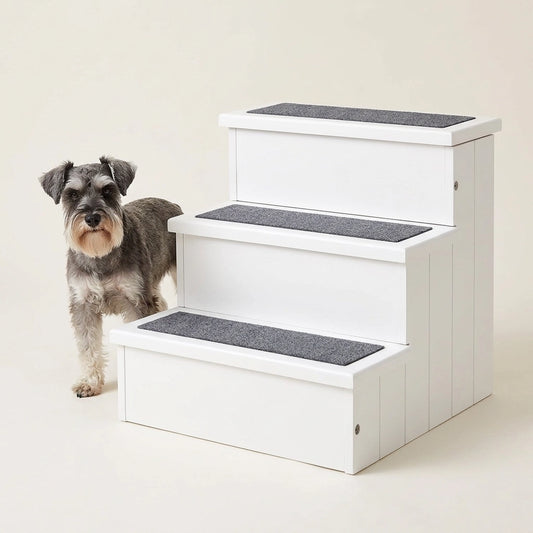
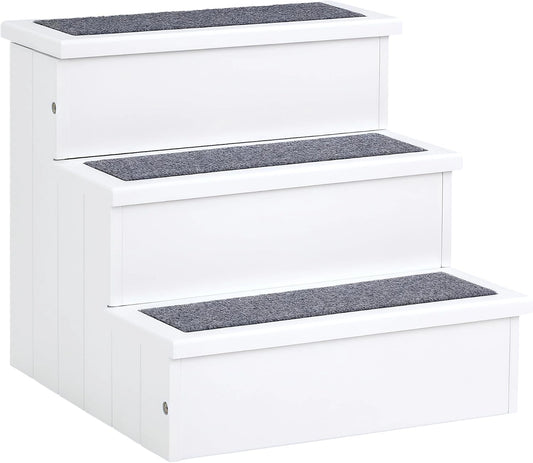
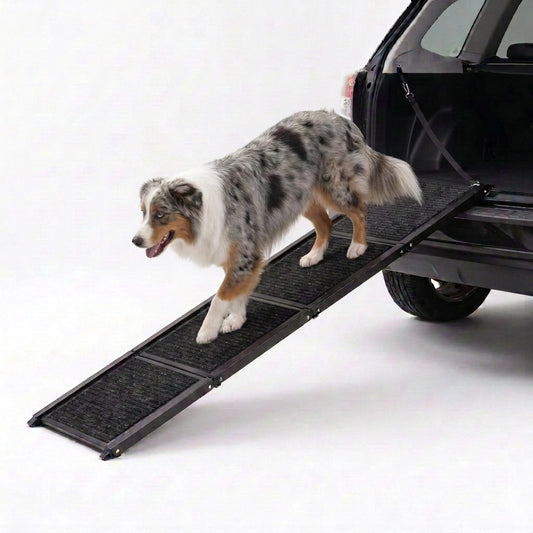
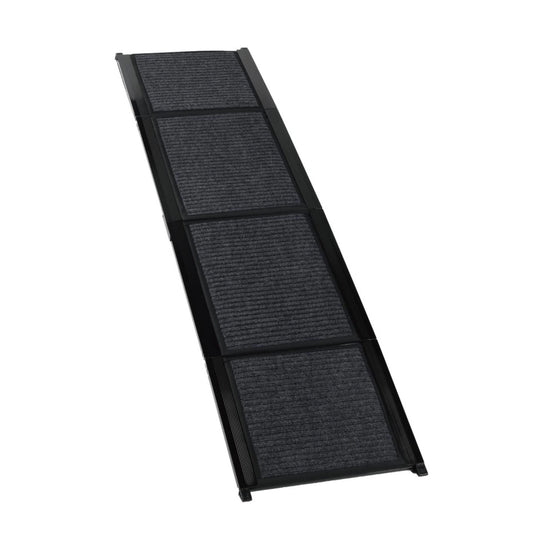

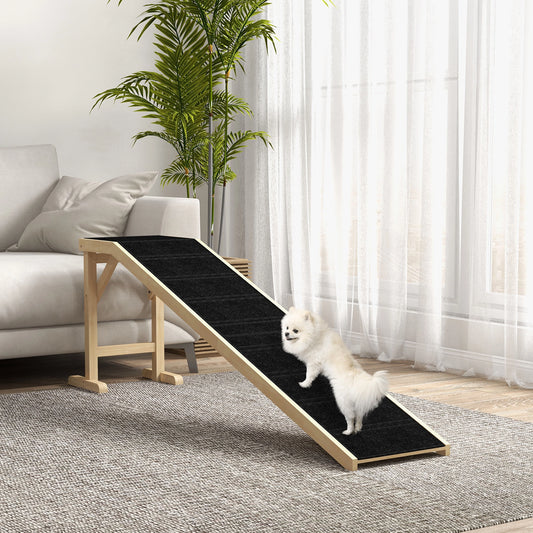
Choose the Setup Before Starting Practice
Check the product dimensions and instructions against the place where it will be used.
A ramp needs enough room for its length and a manageable incline. Stairs need suitable step height and depth. Both require stable supporting surfaces and a clear approach.
Check that the top transition does not leave a gap your dog must jump across. Keep nearby clutter and other pets out of the practice area.
Choose a quiet time when you can supervise without rushing. Good preparation lets you focus on your dog’s response instead of adjusting equipment during an attempt.
Let Curiosity Come First
Give your dog time to sniff and investigate without expecting a full climb. Reward calm interest with a treat, praise, or another familiar reward.
Your dog might approach, step away, and return. That is a reason to slow down, not increase pressure. Avoid crowding them or placing your body where it blocks an easy retreat.
Do not put your dog on the highest step or halfway up a ramp to force the next move. They should have an opportunity to understand the approach.
Introduce One Small Task at a Time
For a portable ramp, begin with it flat on a stable surface if the manufacturer permits this. Let your dog become familiar with the texture before introducing an incline.
For pet stairs, begin with a comfortable approach and exploration of the lower step. A calm investigation can be enough for an early session.
Keep rewards close enough that your dog does not need to stretch or leap. Progress only when movement appears comfortable and controlled.
If the next stage is difficult, do not assume more encouragement will solve the problem.
Keep Practice Short and Predictable
A few calm attempts are more useful than a long, frustrating session. Use the same cue and a familiar reward, and allow rest between sessions.
End before your dog becomes tired or loses interest. There is no fixed schedule that every dog should follow.
Avoid promising yourself a deadline. Some dogs need more time, while others may need a different product or access method.
Keep the environment consistent when possible. Moving the equipment repeatedly during the introduction can make an unfamiliar task harder to understand.


Practice Going Up and Coming Down
Going up and coming down are different tasks. Comfort in one direction does not confirm that your dog can manage the other.
Supervise both, paying attention to the approach and exit. Your dog needs room to step onto the product and move away without twisting around obstacles.
Do not leave them at the top without a suitable way to return. If either direction is difficult, pause and review the setup.
For vehicle practice, park securely on level ground and follow the ramp’s attachment instructions before every attempt.
Notice What Your Dog Is Telling You
Watch for repeated slipping, hesitation, unusual fatigue, distress, or signs of pain. These are not reasons to become firmer with your dog.
Stop rather than pulling on a collar or pushing from behind. Seek professional guidance when movement or comfort is a concern.
A support harness should not be added as an improvised way to make a difficult setup work. Ask your veterinarian or rehabilitation professional whether assistance is appropriate and how it should be provided.
Keep the Routine Thoughtful
Once your dog becomes familiar with the product, continue checking its position and condition. Familiarity does not prevent a ramp from shifting or a walking surface from becoming dirty.
Reassess the setup if furniture changes, the vehicle changes, or your dog’s movement changes. An arrangement that worked previously may need adjustment.
Keep supervising rather than assuming successful practice makes every future crossing straightforward.
Confidence Without Pressure
The goal is not simply to get your dog to the top. It is to find an access routine that fits their abilities and your shared life.
Compare dimensions, choose thoughtfully, and let comfortable experiences guide the pace. Small steps are worthwhile when they help you understand what works for your dog.


Explore more:
🔎 EXPLORE MORE OPTIONS
Browse All Dog Ramps & Stairs
Find a ramp or set of stairs that fits your dog's everyday routine.
View All Dog Ramps & Stairs
📏
Compare Sizes & Features
🚗
Home & Vehicle Access
🐾
Options for Your Routine


