
By BarkLoyal Team · December 1, 2025
Choosing Dog Recovery Gear
Dog recovery gear includes products with very different purposes. A leg sleeve covers a specific area, a recovery suit is a body garment, and a sling gives a caregiver a way to provide assistance. Although these items may appear together in a collection, they should not be treated as interchangeable solutions.
Understanding those differences helps you explore the right product category before comparing individual listings. This guide explains how common designs differ and which questions to ask. It does not recommend equipment for a diagnosis or replace instructions from your veterinary team.
1. Compare leg coverings, recovery suits, collars, and lifting aids by their intended function.
2. Distinguish coverage from lifting assistance or prescribed immobilization.
3. Confirm medical suitability, placement, and use with your veterinary team.
Start With the Function, Not the Name
Words such as “support,” “brace,” and “recovery” appear across many product categories. The name alone does not tell you whether an item is a flexible covering, a garment, a barrier, or equipment designed for assisted movement.
Look at the body area involved and how the product is constructed. Does it wrap around a lower leg, cover part of the torso, surround the neck, or provide handles for a caregiver?
Describe the task in plain language before choosing a category. “Cover part of the front leg” and “help me assist my dog during an approved activity” are different requirements.
Front-Leg Sleeves and Other Leg Coverings
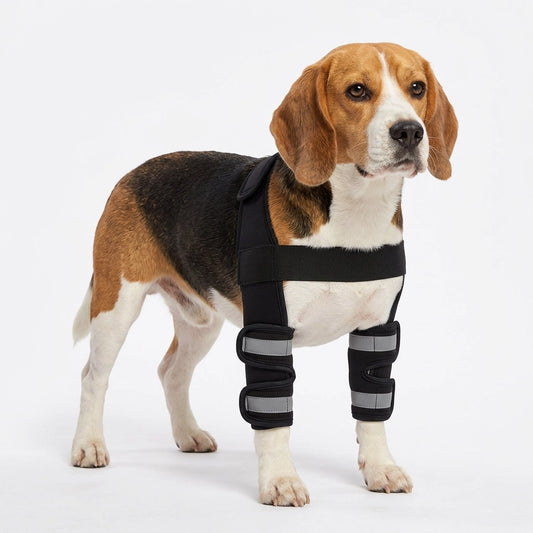
Leg sleeves are worn around a defined section of a leg. Designs vary in length, shape, material, and attachment method. Some leave the paw uncovered, while other products extend over different areas.
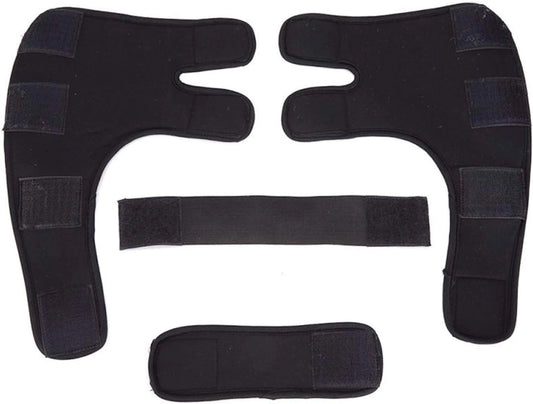
BarkLoyal’s Dog Front Leg Support Sleeves · Pair uses flexible SBR material and includes two front-leg sleeves with two separate fastening straps. It is a different type of product from a rigid splint.
When comparing sleeves, identify exactly where the fabric sits and which components secure it. Do not assume that coverage means immobilization, that separate straps are lifting handles, or that every sleeve is suitable over a dressing.
For injury-related use, ask your veterinarian whether coverage and contact in that location are appropriate.
Related Products
Elbow Coverings and Joint-Area Designs
A covering shaped for the elbow is not the same as a lower-leg sleeve. Its position, openings, and attachment points may differ, even when both products use soft fabric and adjustable closures.
Likewise, products described as knee or joint supports can have substantially different constructions. A flexible wrap and a structured brace should not be compared as though they provide identical functions.
Check whether a design is intended for a front or rear leg and which part of the limb it covers. Avoid choosing a product simply because its photograph appears close to the area you have in mind.
Recovery Suits and Body Garments
A recovery suit is a garment worn around part of the body. Its coverage depends on the cut, openings, closures, and selected size.
Compared with a leg sleeve, a suit covers a different area and introduces different practical questions. Consider how it goes on, which areas remain accessible, and what the instructions say about bathroom breaks and removal.
Do not assume that every suit covers every surgical location or that fabric coverage makes a collar unnecessary. Ask your veterinary team whether the garment’s design is appropriate for the location involved and whether additional measures are needed.
Recovery Collars and Inflatable Designs
Recovery collars are worn around the neck and are intended to limit access to certain body areas. Their shapes and dimensions differ, so appearance alone cannot establish whether a particular design will work for an individual dog.
An inflatable collar and a cone-shaped collar do not have identical geometry. A dog’s proportions and the location that needs to remain inaccessible matter when discussing suitability.
Do not choose solely by softness, compactness, or the way a product looks in a photograph. Ask your veterinary team which design and fit requirements apply, and how to confirm that the intended area remains inaccessible during supervised use.
Slings and Support Harnesses
Slings and support harnesses belong to the assisted-movement category rather than the body-coverage category. Their construction may include support sections, straps, and handles positioned for caregiver use.
Rear-support, front-support, and full-body designs are not interchangeable. The location of support and the way the equipment is applied need to match the assistance your veterinary team has approved.
A walking harness should not be assumed suitable for lifting. Similarly, a handle does not establish how much weight a product can carry or how it should be used. Confirm the manufacturer’s stated purpose and obtain individual instructions before providing assistance.


Flexible Gear Is Not a Prescribed Splint
A flexible sleeve, padded garment, or adjustable wrap should not be treated as a substitute for a prescribed splint or other veterinary orthosis.
Differences in structure matter. Soft fabric, fastening straps, and rigid components serve different design purposes, and similar-looking products may not provide equivalent control or restriction.
Avoid interpreting a product name, customer review, or lifestyle image as evidence that an item stabilizes a joint or spine. If immobilization or controlled movement is part of your dog’s care plan, ask your veterinary team to identify the required equipment.
When More Than One Product Is Involved
Sometimes a care plan involves more than one item, but that does not mean products can automatically be layered or combined.
A garment may overlap a harness, a strap may cross another component, or a collar may affect access to equipment. Ask about the combination rather than assessing each item separately.
Keep the instructions for each product available. Confirm placement, supervision, removal, and any restrictions before use. If an attachment method or interaction is unclear, resolve it rather than improvising.
The aim is to understand each item’s role, not to add more equipment than your dog’s plan requires.
Choose the Category, Then Compare the Details
Start with the distinction that matters most: coverage, limiting access, or caregiver-assisted movement. Then compare products within the relevant category.
For measurements, package contents, instructions, and purchase checks, continue with our Support & Recovery Buying Guide. For organizing supplies and shared responsibilities, read Support & Recovery at Home.
Explore Support & Recovery to review product descriptions. For product details, contact support@barkloyal.com. For diagnosis, postoperative suitability, or changes to treatment, speak with your veterinary team.


