
By BarkLoyal Team · December 1, 2025
How to Measure Your Dog for a Wheelchair: A Step-by-Step Guide
Getting the perfect fit for your dog's wheelchair is essential for their comfort, safety, and mobility. An ill-fitting wheelchair can cause discomfort, chafing, or even injury, while a properly fitted one will allow your dog to move naturally and confidently. This comprehensive guide will walk you through the exact measurements you need and how to take them accurately.
Why Accurate Measurements Matter
A dog wheelchair is a precision mobility aid, not a one-size-fits-all solution. Just as you wouldn't wear shoes that are too tight or too loose, your dog needs a wheelchair that fits their unique body shape and size perfectly.
Proper measurements ensure:
• Comfort: Prevents rubbing, chafing, and pressure points
• Safety: Reduces risk of tipping or instability
• Effectiveness: Allows natural gait and proper weight distribution
• Confidence: Helps your dog move freely without restriction
Even a difference of an inch can significantly impact how well the wheelchair functions, so taking your time with measurements is crucial.
Tools You'll Need
Before you begin, gather these simple tools:
• Flexible measuring tape: A soft fabric measuring tape (like those used for sewing) works best
• Pen and paper: To record measurements
• Treats: To keep your dog calm and cooperative
• Helper: An extra pair of hands makes the process much easier
• Level surface: Ensure your dog is standing on flat, even ground
Related Products
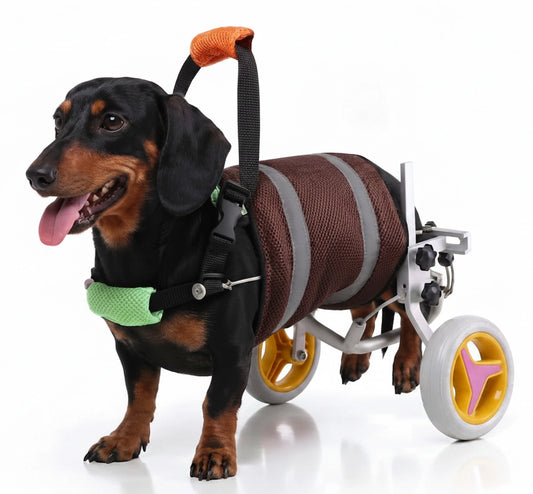
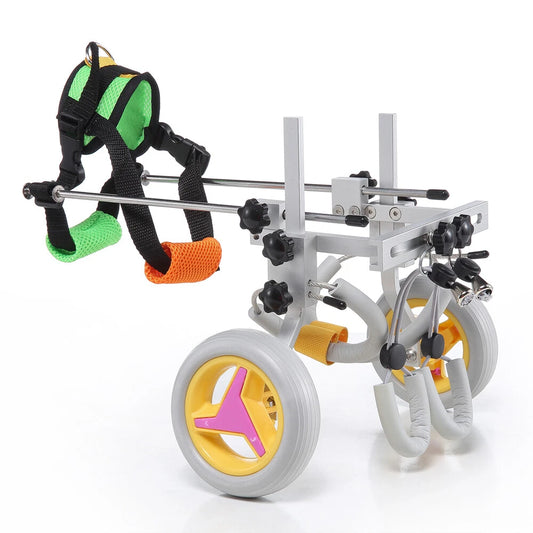
Preparing Your Dog
Your dog should be standing in a natural, relaxed position for accurate measurements. Here's how to prepare:
1. Choose the right time: Measure when your dog is calm, not right after exercise or mealtime
2. Find a quiet space: Minimize distractions to help your dog stand still
3. Use positive reinforcement: Offer treats and praise throughout the process
4. Take breaks: If your dog becomes restless, pause and try again later
5. Natural stance: Don't force your dog into an unnatural position; let them stand comfortably
Essential Measurements for Rear Support Wheelchairs
1. Length (Back Length)
This is the most critical measurement for wheelchair fit.
How to measure: Place the measuring tape at the base of your dog's neck (where the collar sits) and extend it along the spine to the base of the tail (where the tail meets the body, not the tip of the tail).
Tips:
• Keep the tape straight along the spine
• Don't pull the tape tight; let it rest naturally on your dog's back
• If your dog has a curved spine, follow the natural curve
Why it matters: This measurement determines the length of the wheelchair frame and ensures proper weight distribution.
2. Hip Height (Rear Leg Height)
This measurement determines how high the wheels should be positioned.
How to measure: Measure from the ground to the top of your dog's hip bone (the highest point of the hip when standing). This is typically just in front of where the hind leg meets the body.
Tips:
• Ensure your dog is standing on a level surface
• Measure on both sides and use the average if there's a difference
• The hip bone is the bony protrusion you can feel at the top of the hind leg
Why it matters: Correct hip height ensures the wheelchair supports your dog at the right level, preventing dragging or lifting.
3. Chest Width
This measurement ensures the wheelchair frame doesn't interfere with your dog's front legs.
How to measure: Measure the widest part of your dog's chest, typically just behind the front legs.
Tips:
• Wrap the tape around the chest, not too tight
• You should be able to fit two fingers between the tape and your dog
• Measure at the widest point for accuracy
Why it matters: Proper chest width prevents the wheelchair from being too narrow (restricting movement) or too wide (causing instability).
4. Hip Width
This determines the width of the wheelchair's rear support.
How to measure: Measure across your dog's hips at the widest point, typically across the hip bones.
Tips:
• Measure from the outside of one hip bone to the outside of the other
• Don't compress the fur; measure the actual body width
• This measurement helps determine wheel spacing
Why it matters: Ensures the wheelchair provides adequate support without being too wide or narrow.
5. Weight
Accurate weight is essential for determining the appropriate wheel size and frame strength.
How to measure: Weigh your dog on a reliable scale. For small dogs, you can weigh yourself holding the dog, then subtract your weight.
Tips:
• Weigh in the morning before meals for consistency
• If your dog's weight fluctuates, use the current weight
• Update measurements if your dog gains or loses significant weight
Why it matters: Weight determines the structural requirements and wheel size needed to support your dog safely.
Additional Measurements for Front Support Wheelchairs
If you're measuring for a front support wheelchair, you'll also need:
Shoulder Height
How to measure: From the ground to the top of the shoulder blade (scapula) when standing.
Front Leg Length
How to measure: From the ground to the point where the front leg meets the chest.
Measurements for Full Support (Quad) Wheelchairs
Full support wheelchairs require all the measurements above, plus:
Belly Clearance
How to measure: The distance from the ground to the lowest point of your dog's belly when standing.
Why it matters: Ensures the wheelchair's support straps don't hang too low or sit too high.


Common Measuring Mistakes to Avoid
1. Measuring a moving dog: Always measure when your dog is standing still
2. Pulling the tape too tight: This gives inaccurate, smaller measurements
3. Measuring over thick fur: Part the fur to measure the actual body
4. Inconsistent positioning: Ensure your dog stands the same way for all measurements
5. Rounding numbers: Be precise; don't round to the nearest inch
6. Measuring only once: Take each measurement 2-3 times to ensure accuracy
7. Forgetting to account for growth: For young dogs, consult with the manufacturer about adjustability
Recording Your Measurements
Create a clear record of all measurements:
Dog's Name: _______________
Date: _______________
Weight: _______________
Back Length: _______________
Hip Height: _______________
Chest Width: _______________
Hip Width: _______________
[Additional measurements as needed]
What to Do with Your Measurements
Once you have accurate measurements:
1. Consult sizing charts: Most wheelchair manufacturers provide detailed sizing charts
2. Contact the manufacturer: If you're between sizes or have questions, reach out directly
3. Consider adjustability: Look for wheelchairs with adjustment ranges that accommodate your dog's measurements
4. Custom options: For dogs with unique body shapes, consider custom-built wheelchairs
When to Remeasure
Remeasure your dog if:
• They gain or lose more than 5% of their body weight
• Their condition progresses and their posture changes
• You're switching to a different type of wheelchair
• It's been more than 6 months since the last measurement (for growing or aging dogs)
Conclusion
Taking accurate measurements is the foundation of finding the perfect wheelchair for your dog. While it may seem tedious, spending 15-20 minutes on careful measurement can make the difference between a wheelchair that transforms your dog's life and one that sits unused in the corner.
Remember, when in doubt, reach out to the wheelchair manufacturer. Most companies have experienced staff who can guide you through the measuring process and help ensure you get the perfect fit for your beloved companion.

Explore more:
🔍 EXPLORE MORE OPTIONS
Browse All Dog Wheelchairs Products
Compare sizes, features, and find the perfect mobility solution for your dog's needs.
View All Wheelchairs Products
🛡️
Adjustable & Customizable
💪
Lightweight & Durable
🐕
Veterinarian Approved


